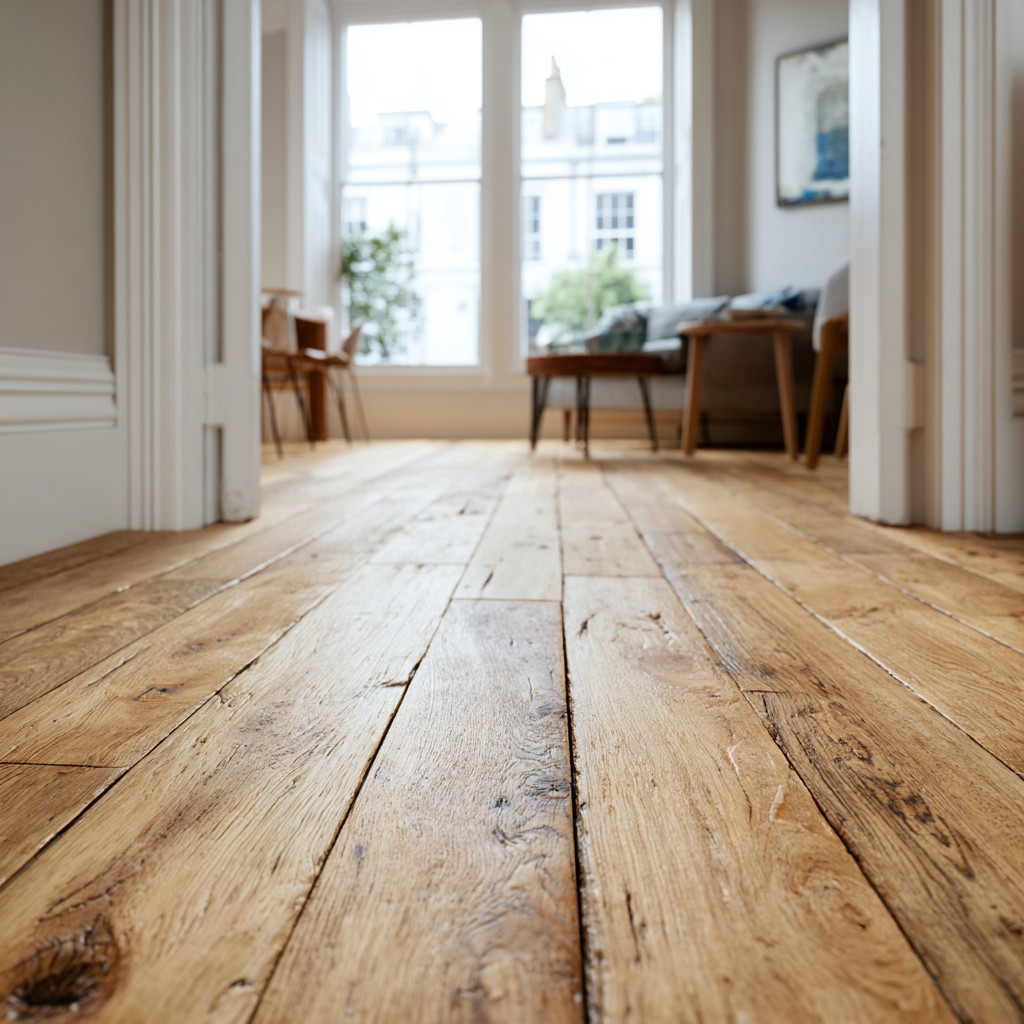
The Real Reason Your Wooden Floors Look Dull After Cleaning (And How to Fix It Naturally)
There are few things more dispiriting in the world of housekeeping than cleaning your wooden floors with genuine effort and commitment, standing back to admire the results, and finding that they look – if anything – slightly worse than when you started. Not dirty, exactly. Not damaged. Just dull. Flat. Lifeless. Like a photograph of a floor rather than an actual floor. You mop, you dry, you wait, and then the light shifts and reveals this filmy, lacklustre surface staring back at you with complete indifference to everything you’ve just done.
If this is your situation – and based on conversations with virtually everyone I know who has wooden floors, it very much is – the good news is that the floor is almost certainly not the problem. You are, most likely, cleaning it perfectly well. You’re just cleaning it with the wrong things. Here’s what’s actually going on, and how to fix it without spending a penny on specialist products.
It’s Not Dirt – It’s What You’re Cleaning With
This is the part that tends to produce a slightly pained expression when people hear it for the first time. The dullness on your wooden floors is, in the majority of cases, caused directly by the products you’re using to clean them. Not the dirt. Not the floor. The cleaning products themselves.
The Product Residue Problem You Didn’t Know You Had
Most mainstream floor cleaners – the bottles with the cheerful branding and the promises of a brilliant shine – contain a combination of surfactants, solvents, preservatives, and often either a wax compound or a polymer-based “shine enhancer.” When you apply them to your floor, they do lift and remove surface dirt. But they also leave behind a thin film of their own chemistry on every centimetre they touch. The first time you use them, this film is negligible. The second time, it layers over the first. By the time you’ve been using the same product weekly for six months, you have a cumulative residue coating that is simultaneously attracting dust and diffusing light – which is precisely what creates that flat, hazy, dull appearance that no amount of additional mopping seems to shift.
The cruel irony is that applying more product in response to the dullness makes the situation measurably worse. You are, in effect, polishing the residue with more residue. The floor looks momentarily better while it’s still damp – that brief, glorious wet sheen – and then it dries and settles back into the same flatness, and the cycle continues.
Too Much Water Is Doing Quiet Damage
The second significant culprit is water, and specifically the amount of it. Wooden floors and standing moisture are genuinely poor companions. When you mop with a wet mop – or worse, a steam mop – and leave the water to sit or evaporate slowly, it penetrates the grain of the wood and the gaps between boards. Over time, this causes the wood fibres at the surface level to swell and roughen microscopically. This roughened texture scatters light rather than reflecting it cleanly, which is the physical mechanism behind that dull, lacklustre look. It’s not a stain. It’s structural – and it gets progressively worse with every soaking.
The Specific Culprits Worth Naming Directly
Steam Mops: Brilliant Everywhere Except Here
Steam mops have an almost evangelical following, and genuinely – for tiles, for vinyl, for bathroom floors – they are excellent. But on wooden floors, they are consistently and enthusiastically terrible. The combination of heat and high moisture content is exactly the conditions most likely to raise the wood grain, loosen the finish, cause boards to warp at the edges, and produce precisely the dull and damaged appearance we’re trying to fix. If you have a steam mop and wooden floors, use the steam mop in every other room and make the wooden floors its one exception. This is non-negotiable advice, delivered with warmth but real firmness.
The Wrong Product for the Finish You Actually Have
There is also a finish mismatch problem that doesn’t get discussed nearly enough. Wooden floors come with different surface treatments – lacquered, oiled, waxed, or unfinished – and each one responds differently to cleaning. A product formulated for lacquered floors applied to an oiled floor will strip the oil finish over time and leave the wood looking parched and dull. Wax-based cleaners on lacquered floors create a greasy, smeared appearance that no microfibre cloth can resolve. If you’re not certain what finish your floor has, a quick test is to put a small drop of water on an inconspicuous section – if it beads, you have a lacquered or sealed finish; if it soaks in relatively quickly, you have an oiled or waxed floor. This distinction will determine everything about how you clean and restore it.
The Natural Fixes That Actually Work
Right. Now that we know what’s causing the problem, here are the methods that address it – all of them natural, all of them inexpensive, and all of them considerably more effective than reaching for another bottle of floor cleaner.
Diluted White Vinegar (For Sealed and Lacquered Floors)
White vinegar is mildly acidic, which makes it exceptionally good at breaking down the alkaline residue left behind by most commercial floor cleaners. For sealed or lacquered wooden floors, mix half a cup of white vinegar into a bucket of warm water – that’s the correct dilution, and it matters. Any stronger and you risk dulling the lacquer itself over time. Wring your mop or cloth until it is barely damp rather than wet – the floor should dry within a minute or two of contact – and work with the grain of the wood rather than across it. The results on a residue-heavy floor are often genuinely startling. The haze lifts, the natural grain re-emerges, and you’re reminded of what the floor actually looked like when it was first laid.
One firm note: do not use white vinegar on oiled or waxed wooden floors. The acidity will strip the oil finish and leave the wood unprotected and even duller than before. Oiled floors need a different approach – see below.
Plain Warm Water and a Well-Wrung Microfibre Mop
For oiled and waxed wooden floors, the single best cleaning method is also the simplest one: plain warm water, a microfibre flat mop, wrung out so thoroughly that it is barely registering as damp. No product. Nothing added. Just water and a good microfibre head that picks up rather than redistributes fine dust and debris. Clean in the direction of the grain, working backwards out of the room so you’re not walking over what you’ve just done, and let it dry naturally – which should take no more than a few minutes if your mop is correctly wrung. Done weekly as maintenance, this keeps oiled floors looking exactly as they should without any of the residue accumulation that causes the dullness in the first place.
If your oiled floor is already looking dull and a plain water clean isn’t lifting it, the floor likely needs re-oiling rather than more cleaning – a job for a Sunday afternoon twice a year, and one that makes an extraordinary difference to how the floor looks and how well it holds up.
Black Tea for a Natural Shine Boost (Seriously)
This one raises eyebrows every time, and yet it has been used on wooden floors for generations for very good reason. Brew four to five bags of ordinary black tea in a litre of boiling water, allow it to cool completely, and use it in place of your usual floor cleaning solution – applied, as always, with a barely-damp cloth or mop. The tannins in the tea are mildly astringent, which helps lift surface grime, and they interact with the wood in a way that gently enhances the natural warmth and depth of the grain without leaving any residue of their own. It works particularly beautifully on darker wood tones – oak, walnut, aged pine. It will not substitute for re-oiling a dry floor, but as a regular maintenance clean that leaves the floor genuinely gleaming, it is one of those old-fashioned tricks that holds up completely under scrutiny.
Keeping Your Floors Looking Brilliant Going Forward
Less Product, Less Water, Better Results
The single most impactful change you can make to your floor-cleaning routine is to use significantly less of everything. Less cleaning solution – or none at all, once you’ve stripped back the residue. Less water on the mop, every single time. Less frequency for any kind of wet cleaning, supplemented instead by dry microfibre mopping for day-to-day maintenance. Wooden floors don’t need the volume of intervention we tend to apply to them. They need gentle, consistent, light-touch care – and they reward it visibly.
The Drying Step People Almost Always Skip
After any damp cleaning, particularly in a room with limited airflow, open a window or run a fan briefly to ensure the floor dries completely within a few minutes. This single habit prevents the gradual moisture damage that roughens wood grain over time and is responsible for a significant portion of the long-term dullness people attribute to the floor simply ageing. The floor isn’t ageing prematurely. It’s just been slightly too wet, slightly too often, for slightly too long. Give it the chance to dry properly each time and it will look considerably better for considerably longer.
Dull wooden floors are almost never a floor problem – they are a routine problem, and routines are entirely within your power to change. Strip back the residue, reconsider the products, mind the water levels, and give black tea a genuinely fair chance before you dismiss it. Your floors have very good bones. They just need the right kind of looking after.