How to Remove Crayon from Painted Walls Without Removing the Actual Paint (For Toddler Survivors)
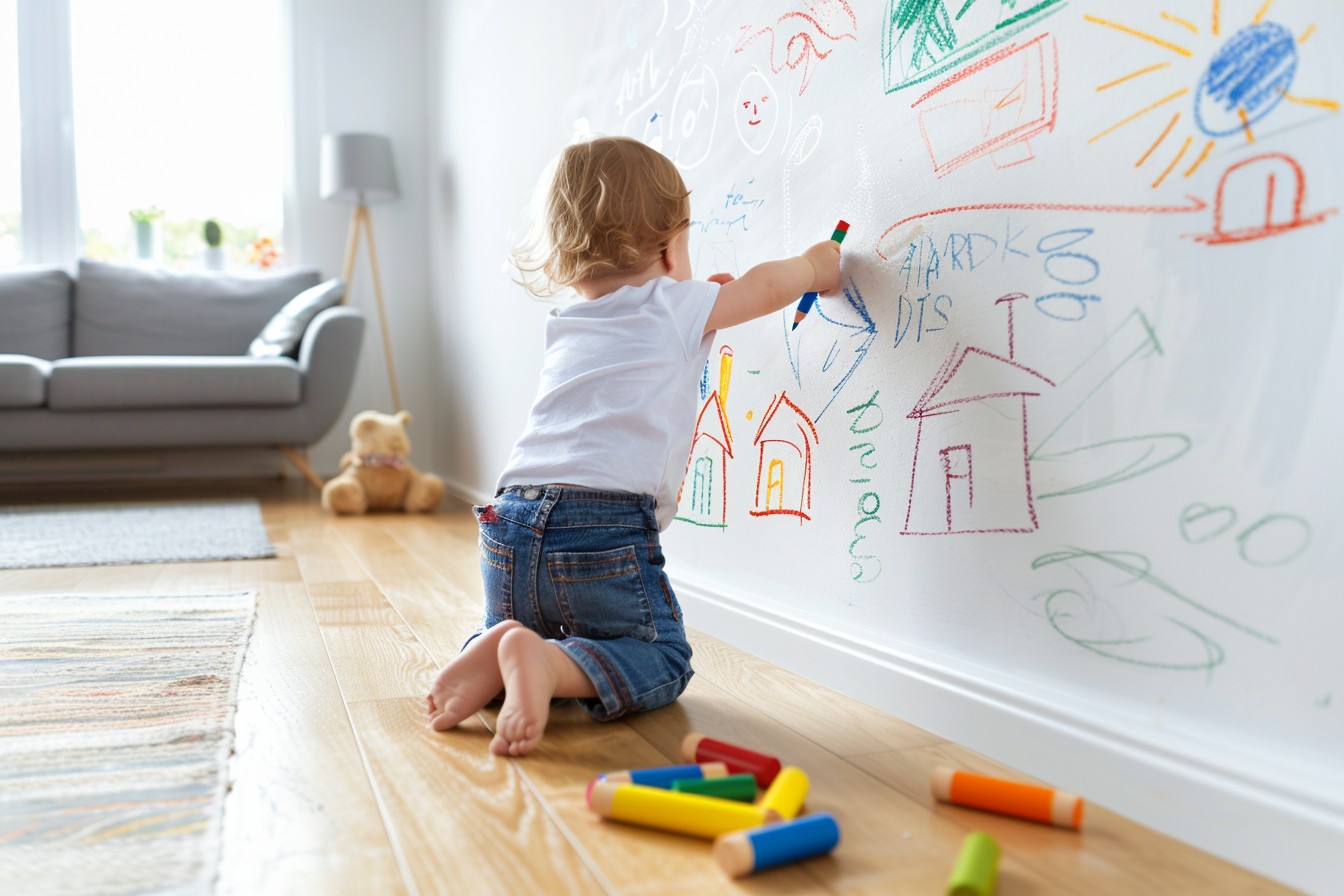
You were gone for seven minutes. You know this because you timed it – long enough to make a cup of tea, short enough to feel entirely reasonable. And yet, in those seven minutes, your three-year-old has produced what can only be described as a statement piece. Floor to ceiling. Three colours. The hallway wall, the bit just inside the living room door, and – in a creative flourish that genuinely deserves some acknowledgement – a small section of the skirting board. The artist in question is now watching television with the serene expression of someone who has done absolutely nothing wrong.
Welcome to the club. We have biscuits and mild trauma.
Before you do anything – and I mean anything – please step away from the wet cloth and the scrubbing brush. The instinct to immediately rub at it is understandable, but it is also the fastest route to turning a crayon problem into a paint problem. Take a breath. This is absolutely fixable. Here’s everything you need to know.
Why Crayon Is a Particularly Awkward Customer
It helps enormously to understand what you’re actually dealing with before you start, because crayon behaves quite differently from other things that end up on walls – ink, paint, muddy fingerprints – and the wrong approach doesn’t just fail, it actively makes things worse.
It’s Basically Coloured Wax – And Wax Hates Water
Crayons are made from paraffin wax and pigment. That’s essentially it. And the defining characteristic of wax is that water has absolutely no effect on it whatsoever – the two simply don’t interact. This is why the instinctive damp-cloth response is such a disaster: you’re not cleaning the wax, you’re redistributing it, working the pigment deeper into the texture of the paint surface with every stroke. What started as a mark sitting on top of the wall becomes a mark embedded within it. The approach you need is one that either dissolves the wax, displaces it using an oil-based substance, or lifts it through very careful and very gentle abrasion. Water alone will not feature meaningfully in any of these strategies.
The Paint Beneath Is the Variable That Changes Everything
Here’s the thing that most crayon-removal advice glosses over: the wall’s paint finish matters enormously, and getting this wrong is how you end up with a clean patch that looks worse than the original artwork. Matt and flat emulsion finishes – the most common choice for living rooms, hallways, and bedrooms in UK homes – are porous and have no protective sheen. They absorb things readily, and they show any surface disruption immediately. Satin and eggshell finishes have a slight sheen that makes them noticeably more resilient. Gloss is the most forgiving of all. Have a think about what’s on your walls before you choose your method below, because the same technique that works beautifully on a satin finish can leave a permanently dull, scrubbed-looking patch on matt emulsion. Knowing your finish is not optional background information – it is the whole game.
The Golden Rule Before You Do Anything
There are two non-negotiable steps before you apply anything to the wall. These take less than five minutes combined and exist purely to save you from a much larger problem.
Always Test in a Hidden Spot
Find an inconspicuous section of the same wall – behind a door, low down near the skirting, anywhere that won’t be seen – and test your chosen method there first. Every painted surface is slightly different, every paint brand behaves differently, and the age of the paint affects its resilience too. A quick two-minute patch test is the only reliable way to know whether your method will lift the crayon, the paint, or both. This is the step people skip and then wish, very sincerely, that they hadn’t.
Step Away From the Scrubbing Brush
Scrubbing is the enemy of painted walls, and it is a particularly dangerous enemy on matt emulsion. Aggressive abrasion roughens the surface texture, removes the top layer of paint, and creates a dull, lightless patch that reflects differently from the rest of the wall – visible in any decent light, and essentially permanent without repainting. The correct motion for every single method in this article is gentle. Small circular strokes, or a soft dabbing action. We are coaxing the crayon off the wall. We are not punishing it.
Methods That Actually Shift Crayon (Without Taking the Wall With It)
Four methods, ordered from gentlest to most robust. Start at the top and only move further down the list if you genuinely need to.
Method 1 – A Dab of Washing-Up Liquid (Start Here Always)
A small amount of neat washing-up liquid applied directly to a damp microfibre cloth – not a soaking wet one, just damp – worked gently over the crayon in small circular motions is always your first attempt. The surfactants in washing-up liquid help loosen the wax without introducing anything harsh. This works best on lighter, more recent marks and on tougher finishes like satin or eggshell. If you catch the artwork early – ideally before the pigment has had time to really settle into the paint texture – this alone will often do the job. Wipe clean with a fresh damp cloth afterwards and dry the area immediately. Temper your expectations on heavy buildup or matt emulsion, but it’s always worth starting here.
Method 2 – Bicarbonate of Soda (The Gentle Abrasive, Again)
A small amount of bicarbonate of soda on a damp cloth provides just enough mild abrasive texture to lift the waxy surface layer without the damaging bite of commercial abrasive cleaners. The critical point here is pressure – use the absolute minimum. You want the texture of the bicarbonate to do the work, not your arm. This method performs well on satin and eggshell finishes and can make a real difference on moderately stubborn marks. On matt emulsion, treat it with considerable caution and the lightest possible touch, or consider skipping straight to Method 3 instead. Wipe away residue with a clean damp cloth and dry the surface thoroughly.
Method 3 – White Non-Gel Toothpaste (The Surprising One)
This is the one that gets the most sceptical looks at the school gate, and yet it is genuinely one of the most effective options in this list. Plain white non-gel toothpaste contains mild abrasives and a small amount of detergent – exactly the combination needed to break down waxy crayon without overwhelming the paint underneath. Apply a small amount directly onto the mark, work it gently with a soft old toothbrush or a cloth using light circular motions, and then wipe clean with a damp cloth. The texture lifts the pigment and wax together in a way that feels almost unreasonably satisfying. Kate can confirm this personally, in this house, on this exact hallway wall. Use carefully on matt finishes, and make absolutely sure you’re using plain white toothpaste – nothing with gel, whitening compounds, or coloured stripes.
Method 4 – Mayonnaise or Vegetable Oil (Hear Me Out)
Yes, really. Stay with me. The scientific principle at work here is that like dissolves like – the oils in mayonnaise or plain vegetable oil dissolve paraffin wax effectively, breaking the crayon’s bond with the surface. Apply a small amount directly to the marks, leave it to sit for one to two minutes, then wipe away with a dry cloth. Follow immediately with a thorough clean using a washing-up liquid solution to remove every trace of the oily residue – this step is not optional, because oily walls attract dust and grime at an alarming rate. This method is particularly effective on thick, layered, or heavily applied crayon where the wax has really dug in. It is slightly chaotic. It does involve putting mayonnaise on your wall. It works.
What Not to Use (A Brief But Important List)
Equally important as knowing what works is knowing what will cause you a genuinely worse afternoon than the one you’re already having.
The Magic Eraser Problem
Melamine foam sponges are extraordinarily effective, and that is precisely the problem. They function through micro-abrasion – essentially, they are very fine sandpaper – and on a painted wall they will remove a thin layer of paint surface along with the crayon. The result is a clean but visibly dulled patch with a different texture and sheen from the surrounding wall, which is actually harder to address than the original marks. Leave them for the tasks they’re genuinely brilliant at, and keep them well away from emulsion paint.
Bleach, White Spirit, and Bathroom Sprays
Bleach can strip colour and interact unpredictably with emulsion paint pigments. White spirit risks dissolving the paint binder itself on certain finishes. Abrasive bathroom and kitchen sprays are far too aggressive for any painted wall surface. None of these belong anywhere near this particular problem. Everything you need is already in your kitchen and costs almost nothing.
When the Wall Needs a Little Touch-Up Anyway
Sometimes – particularly with matt emulsion, or crayon that has been there for a while before discovery – cleaning will lift the marks but leave a faint ghost, or the gentle abrasion will have altered the surface slightly. This is not a failure. It’s just the moment to reach for a paintbrush instead.
Keeping a Small Pot of Matching Paint Is One of Life’s Underrated Wins
If you still have the original tin from when the room was painted, a careful touch-up with a fine brush takes five minutes and leaves no evidence whatsoever. If you don’t, most DIY retailers and paint brands offer a colour-matching service – bring in a photo or, better, a small chip if you can get one. A small pot of the right shade costs very little and is worth keeping somewhere accessible for the duration of the toddler years, which, in Kate’s experience, last slightly longer than anyone tells you in advance.
Touching Up Without Creating a Visible Patch
The most common touch-up mistake is applying too much paint in too confined an area, which produces a visible blob with hard edges that catches the light. The correct technique is to feather the edges – apply a thin coat that extends slightly beyond the mark in all directions using a barely-loaded brush, blending into the surrounding paint rather than sitting on top of it. If the wall paint has aged and shifted in tone even slightly, a full section repaint from corner to corner will always look more seamless than any spot repair, however carefully done.
Crayon on walls is a rite of passage, and if you’re reading this in a mild panic, I promise you’re going to be absolutely fine. You’ve got the methods, you’ve got the patience, and you’ve got the washing-up liquid. And if your toddler does it again next week – which, statistically speaking, is a very real possibility – you’ll know exactly what to reach for.